Market Development
Market development is the second leg of investment for producers across Montana. The Montana Wheat & Barley Committee (MWBC) works closely with U.S. Wheat Associates and U.S. Grains Council to reinforce existing trade relationships while fostering new buyers for the Montana grain industry.
On average, MWBC assigns about 27% of its entire budget to marketing development.
VISITING CUSTOMERS
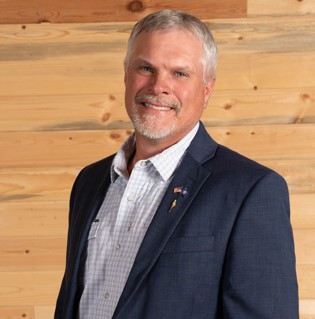
A Visit with Lee Dahlman
District 4 Director, Dutton MT
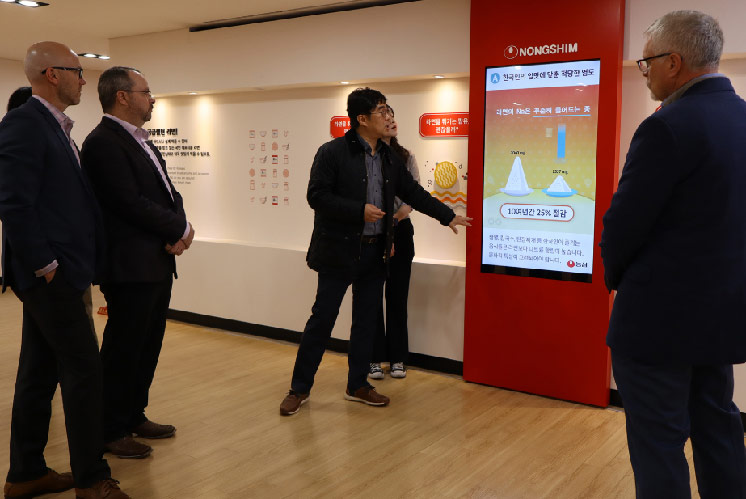
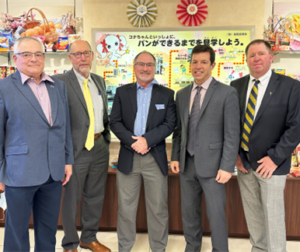
Article covering this March, 2026 mission can be found here.
Lee visited with US Wheat Associates about the educational experience of visiting South Korea this winter
Tell me your name, where you’re from and who you are representing on this board team.
My name is Lee Dahlman. I am from Dutton, Montana, the heart of the Golden Triangle of Montana. I represent the Montana Wheat & Barley Committee (MWBC) as the vice chair, and I’ve been on the board for three years.
My family came over from Germany in 1910, so we were one of the original homesteaders. I’m fourth generation and my kids are going to be the fifth. I have grandkids and hopefully they will someday take over the operation. One of my end goals is to leave the farm better than what I had when I took over. I always want to do better; that’s who I am.
How does this mission overseas fit into those goals?
One of those goals is sustainability. We’re already farming sustainably, but we can always get better. What does that mean for our customers and for our farms?
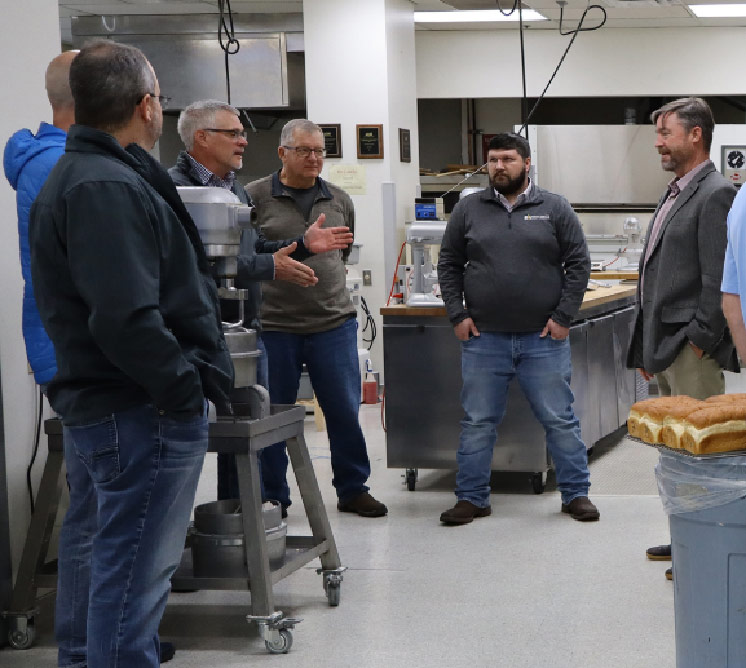
Tell me about what you learned about the U.S. wheat supply chain while we were in Portland.
With MWBC, we fund the Wheat Marketing Center. When you’re dealing with producer money, you have to be accountable. I want to take that message back to the producers.
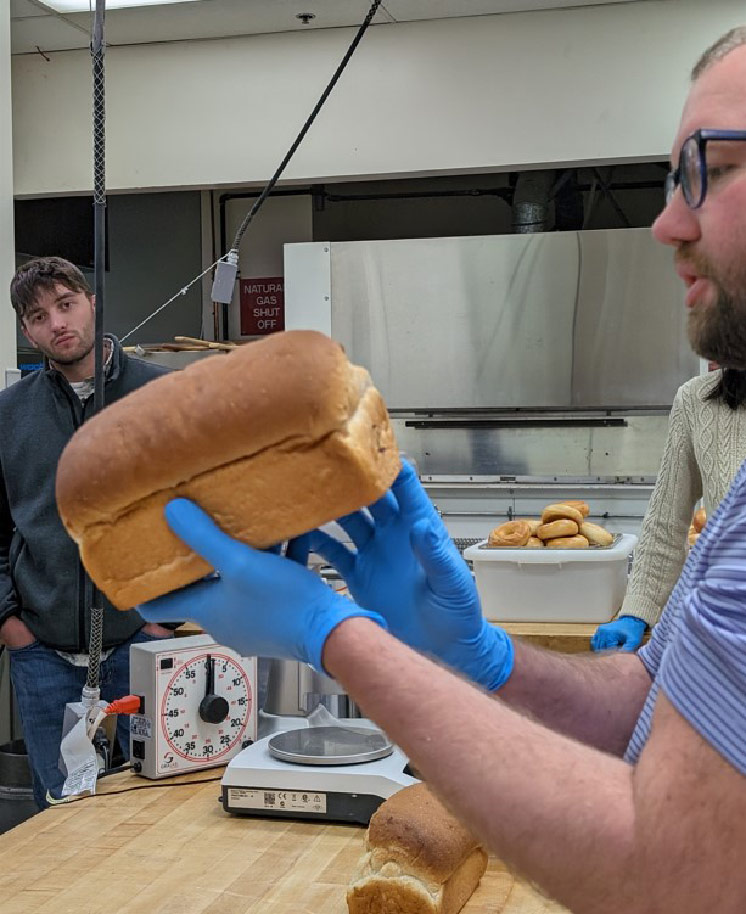
When Mike Moran was talking about the machines they use, I remember when the Wheat Marketing Center asked for funds to buy equipment, and I had no idea what that machine was. We also fund the Northern Crops Institute and I brought up the question if we were double-dipping by funding both. I didn’t realize the amount of testing after harvest and what needs to be done right away. That goes from Montana to the local state grain labs and all the way up to the bigger wheat industry.
This is not your first visit to South Korea, since you participated in the Montana governor’s mission last fall. What are you hoping to learn on this second mission to South Korea? And in Taiwan?
Customers from both of these countries have come to my farm, and they’re excited, like kids in a candy store. And when I go overseas, I get to see them again. They love listening to another producer; they want to see farmers and to talk to them. Having that connection is building relationships, and that is a big deal.
What are some things you learned in South Korea?
How much testing goes on with all the flours and with the milling process. I was very impressed with that and how the wheat is milled, especially after what I learned at the K-State flour milling course.
I did not know about KORUS – The Korea-U.S. Free Trade Agreement. I know there’s been a lot of talk about how tariffs affect farmers. Even our organizations back in Montana are saying that tariffs have hurt agriculture hard. But no tariffs? We don’t hear about that.
What is something you will take back to the Montana Wheat & Barley Committee?
Actually, those noodles! I want to start buying those noodles at home. I haven’t been to a buffet in forever. The food today and that robot noodle bar was an experience. And if I can show my fellow producers that this is Montana or U.S. wheat…if and where it is being sold in the United States.
The toughest topic here was discussing GMO wheat. When I was here before, it sounded like they would accept it, but now it sounds like they really don’t want it. So how are we going to get around that? Do we still go down that road, or do we do it anyways and cross that bridge when we get there?
Determined by the business topic, MWBC board members and staff travel on trade missions to visit current and prospective customers. For example, a Mexico trade mission largely focuses on malt barley while a Taiwan trade mission might focus on hard red spring/winter wheat.
The Montana Department of Commerce will also visit overseas customers, and will often include the Montana grain industry when wheat or barley trade opportunities arise. This collaborative effort between agencies has been fruitful. As an example, Montana established a sister state relationship with Kumamoto, Japan in 1982. Japan is by far the largest buyer of Montana wheat.
TRADE TEAMS
At least a dozen or more trade teams from regions around the world visit Montana for trade visits every year. From Mexico to Japan to Taiwan and beyond, teams are coordinated by partners such as U.S. Wheat Associates or U.S. Grains Council. Trade Teams begin to coordinate their visits through U.S. Wheat/U.S. Grains in early spring and we typically begin to hear about scheduling in May for booking throughout the summer months.
Trade teams run a tight schedule. Most of them are visiting a variety of states producing the same classes of wheat. They may stop in Washington, Idaho or Colorado before arriving in Montana. During their time with us, we bring them to the field whenever possible so they can experience a Montana crop from the ground. They greatly enjoy meeting farm family members while experiencing the Montana way of life. If teams come through Great Falls, we share the Montana State Grain Lab with them; similarly if they come through Bozeman, they’ll spend time at MSU’s plant sciences labs and growth center. Regardless of the location, we make every attempt to visit a first-purchaser (elevator) and a brewery if time allows.
For companies interested in sponsoring trade team dinners, call Kent Kupfner at the MWBC office: 406-761-7732.
Selling to global markets for 70 years
Customer Timeline (previous 10 years to current)
QUALITY TESTING CENTERS
End-use Qualities Elevate US Wheat
MWBC supports the Wheat Marketing Center in Portland, OR and the Northern Crops Institute in Fargo, ND. These premier labs provide technical training and grower workshops, innovative research, product development, and crop quality testing services.